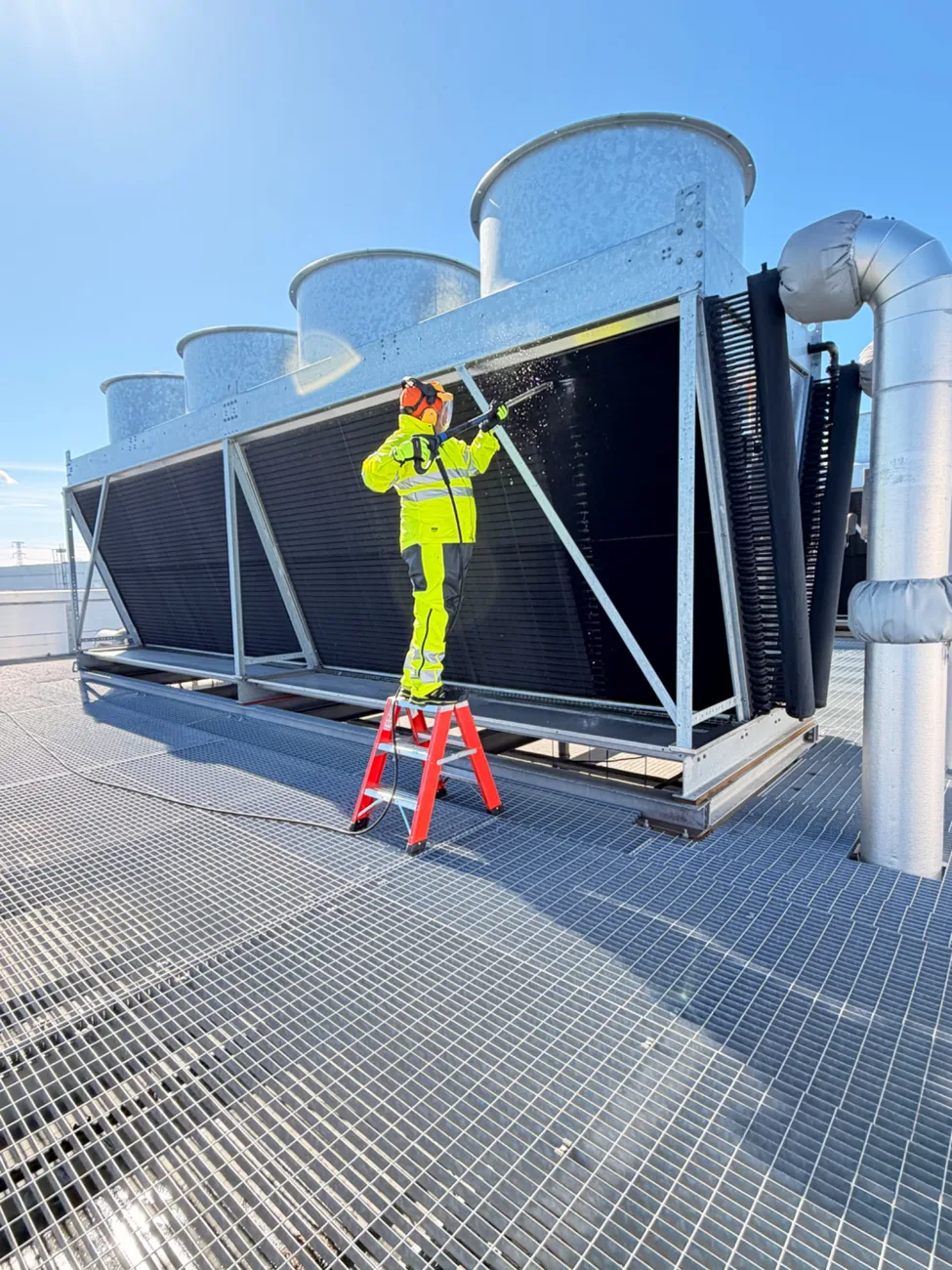
Technical cleaning of cooling towers and cooling equipment for data centers. We plan work to keep heat-transfer surfaces and flow paths clean, considering the equipment and ongoing operations.
Clean cooling systems support reliable operations.
Maintain cooling performance
Clean heat-transfer surfaces support better operating conditions.
About this task+
Dirt, deposits and obstructed flow paths can reduce heat transfer. Regular cleaning is part of the maintenance that supports suitable operating conditions.
Reduce operational risk
Planned maintenance helps protect cooling margins and reliability.
About this task+
Reduced cooling performance can require systems to work harder, potentially increasing energy demand and reducing cooling margins. The effect depends on equipment, load and redundancy.
Tailored to your cooling system
The right service for your equipment and facility.
About this task+
Cooling towers, coils and other cooling systems have different maintenance needs. We establish equipment type, access and manufacturer guidance before selecting methods. Cleaning and shutdowns are coordinated with facility personnel; water treatment and other system maintenance require their own arrangements.
CONSIDERED AT EVERY STEP
Cooling tower cleaning – from review to follow-up
An overview of the process. The detailed method is defined for your facility, equipment and agreed scope.
01
Identify the cooling system
+
Cooling towers and dry coolers require different methods. We review construction, materials, access and manufacturer guidance before defining the assignment.
02
Plan downtime & safe access
+
Work is coordinated with operations and any reserve capacity. Responsible personnel secure fans, pumps and other energy sources before work involving startup or energy-exposure risks.
03
Inspect & select methods
+
Accessible inlets, strainers, nozzles and heat-transfer surfaces are reviewed where present. Deposits, materials and condition determine the method; one treatment does not suit every component.
04
Clean agreed components
+
Dirt and deposits are removed from agreed surfaces without damaging fins, fill or protective coatings. Waste, spills and any runoff are managed under the project plan.
05
Coordinate water hygiene & checks
+
For evaporative systems, cleaning is coordinated with those responsible for water treatment and microbiological control. These are separate maintenance activities that surface cleaning does not replace.
06
Handover & follow-up
+
Results and observations are documented. Facility personnel check functionality and restart equipment. Further maintenance follows equipment condition and load.
01
Technical cleaning tailored to the equipment
Technical installations have different requirements for methods, access and handling. We help plan specialized technical cleaning, including cooling equipment. We first need to understand what will be treated and the conditions that apply to the equipment.
02
The right method for each surface
Materials, contamination and nearby installations influence the choice of method. We review scope and limitations with you. Clear boundaries establish which parts are included and how the area should be left when work is complete.
03
An assignment that fits your schedule
Cooling tower cleaning can form part of planned maintenance or preparation for a specific project. Timing, access and coordination are agreed with the client. Any shutdown requirements must be established before work starts.
What we can help with
Cooling equipment
Technical installations
Methods tailored to the task
Planning and quality assurance
Before your project
Does equipment need to be switched off?+
This depends on the equipment and method. Operating conditions and any shutdowns must be assessed and coordinated with the facility team before the work.
How do you assess the scope?+
Describe the equipment, surfaces and your requirements. Photos, manufacturer guidance and access information help us assess the next step.
THE NEXT STEP
Let’s define your project.
Polmax works throughout Sweden and in Norway, Finland and Denmark. Tell us about your facility, scope and schedule. We always plan our work using RAMS and risk assessments in consultation with you, following your own procedures and requirements.